


Clear options
Understand whether you need maintenance, a repair or a replacement.
Springhill Septic Solutions provides septic tank and drain field services in Spring Hill, Florida. Pumping, inspections, repairs and new systems for homes and businesses.
A recurring backup needs a clear answer. Start with the tank, the drain field and the property records. We help you understand the next step, including Hernando County permits and springs protection requirements.
Understand whether you need maintenance, a repair or a replacement.
Tank, field and plumbing symptoms are considered together.
Know which Hernando approvals apply before work begins.
See starting prices, then confirm a property-specific scope.
Account for access, wells, yard space and seasonal groundwater.
Know what to watch and when to schedule the next check.
Start with the service that matches your need. If you are unsure, describe the symptoms.
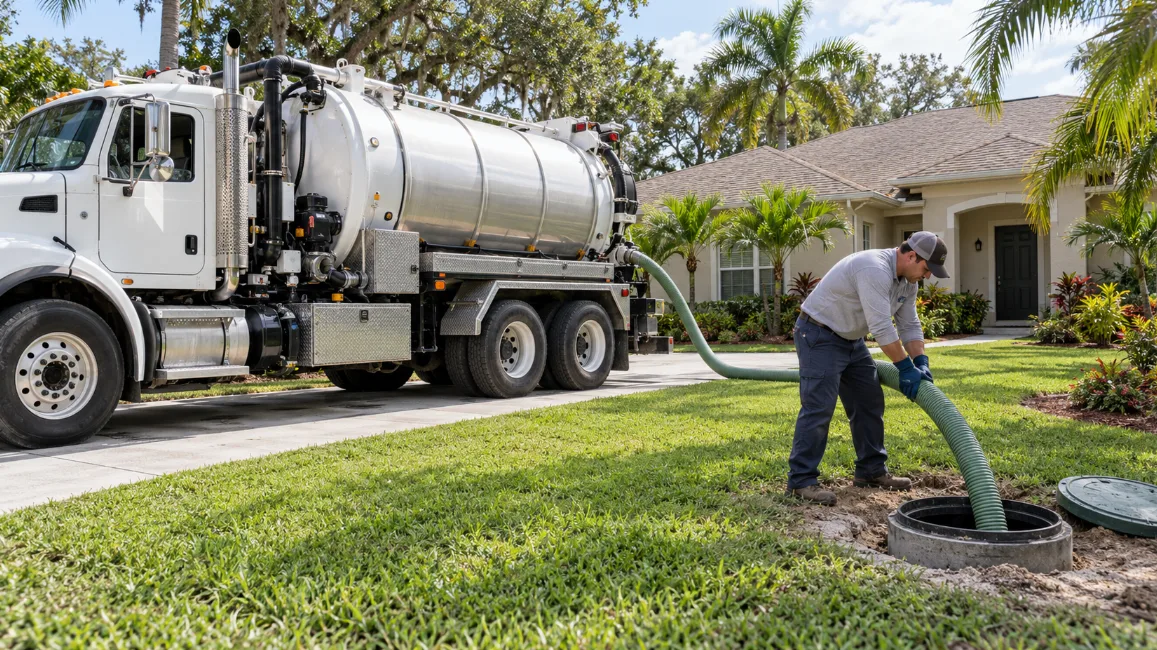
Routine care, a recurring backup or a new system: each starts with a clear scope and the property’s actual needs.
Remove built-up solids before they reach the drain field. Tank size, access and waste type set the scope.
Explore Septic ServiceRemove residue and stubborn deposits with a method suited to your tank’s condition.
Explore Septic ServiceUnderstand tank condition before buying a home, planning repairs or chasing a recurring problem.
Explore Septic ServiceFind the failed component and check repair options before assuming the whole system needs replacement.
Explore Septic ServicePlan a new tank or replacement around the home, usable yard and required treatment standard.
Explore Septic ServiceRequest urgent help for an active backup. Availability and the safest next step must be confirmed.
Explore Septic Service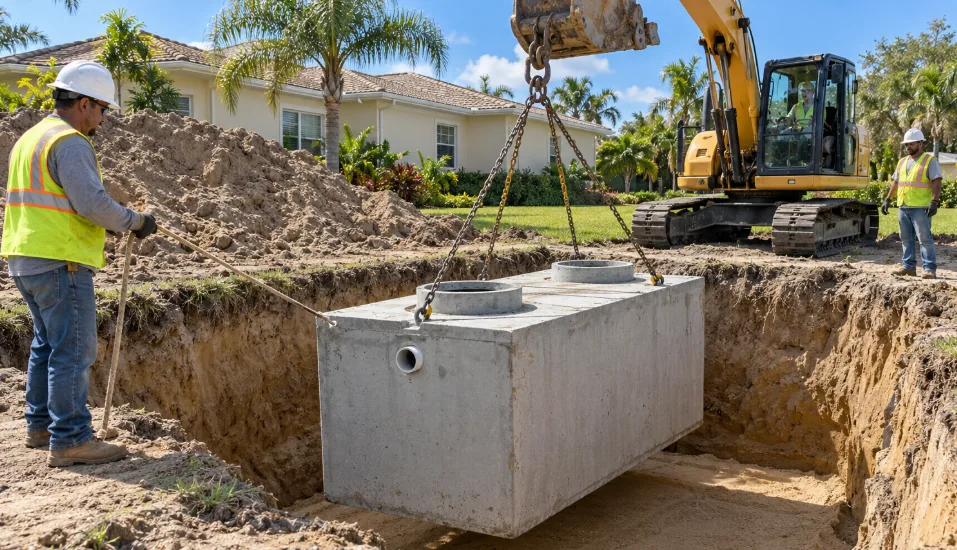
A tank can be sound while the field struggles. Review distribution, soil and groundwater before deciding on repair or replacement.
Check pipes, distribution and site conditions before choosing field repair or replacement.
Explore Drain Field ServiceUnderstand field performance before a purchase, an addition or a major repair decision.
Explore Drain Field ServiceReplace a failing treatment area with a design that fits the property and current requirements.
Explore Drain Field ServiceStart with the floor plan, system record, sewer availability and site conditions before choosing a tank or replacement field.
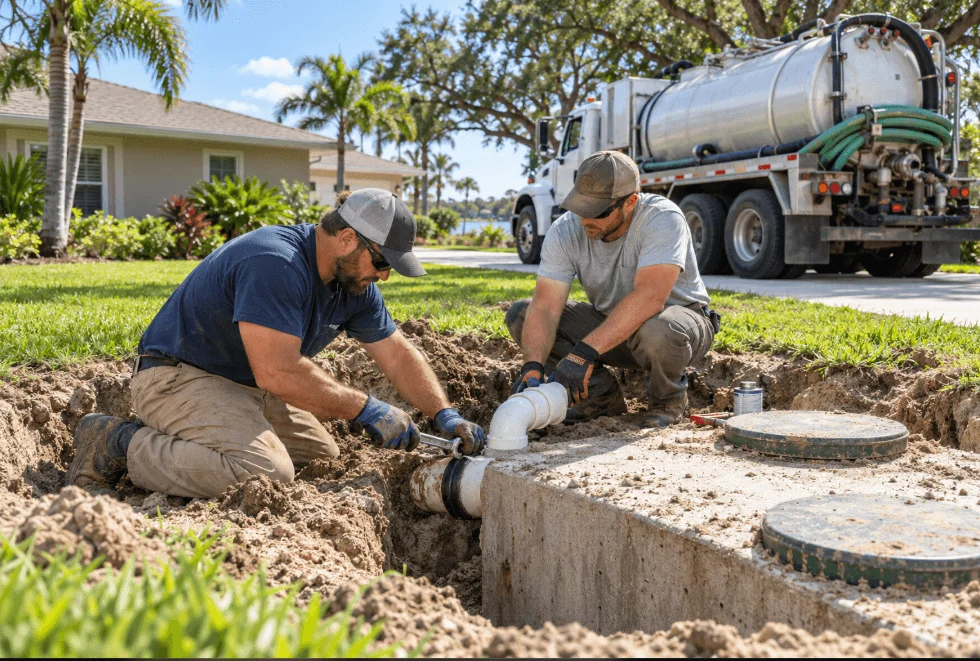
A 3-bedroom home around 1,800 sq ft falls in Florida’s 300-gallon/day example, with 900 gallons of minimum tank storage. A 4-bedroom home around 2,600 sq ft moves to 400 gallons/day and 1,050 gallons. These are examples, not local averages.
Hernando County Environmental Health handles septic permits. Prepare the application, floor plan, scaled site plan and fees. Repair applications also require tank certification/pump-out documentation. Site review, design, construction and final inspection are separate steps.
What looks like a tank failure can start in the drain field, the plumbing or the way the property uses water.
Missed maintenance can let sludge escape and clog the treatment area.
Leaks and heavy daily use can overload the system.
Keep these out of drains, even when a wipe says flushable.
Saturated ground can stop a sound field from draining.
Roots damage pipes. Vehicles compact soil and can crush components.
Failed pumps, neglected filters and extra bedrooms can push a system beyond its design.
A septic system is more than a tank. Its storage capacity, treatment process and drain field each do a different job. A short guide to tank sizing, materials and the local approvals that affect your property.
Bedrooms, living area and approved use set the design flow. Bathrooms alone do not size the system. The criterion requiring the larger flow controls.
| Home example | Design flow | Minimum tank storage |
|---|---|---|
| 2 bed · 751–1,200 sq ft | 200 gal/day | 900 gal |
| 3 bed · 1,201–2,250 sq ft | 300 gal/day | 900 gal |
| 4 bed · 2,251–3,300 sq ft | 400 gal/day | 1,050 gal |
At 401–500 gallons/day, the minimum residential storage example becomes 1,200 gallons. Storage is different from daily treatment capacity. Advanced treatment can need extra equipment or tanks.
Heavy and rigid. Needs lifting access; inspect walls, covers and seams.
Lighter to handle. Correct support, backfill and fittings are essential.
Lightweight molded plastic. Burial depth and groundwater provisions matter.
The tank shell, drain field and pumps have different service lives. Condition and maintenance are more useful than one blanket replacement age.
New systems on lots of one acre or less in impacted BMAP areas require enhanced nitrogen-reducing treatment. Hernando also requires it for repairs and modifications on all lot sizes inside mapped springs Priority Focus Areas, for applications received from December 15, 2025.
A Spring Hill mailing address alone does not establish eligibility. Confirm the parcel boundary, project type and current requirements. Approved options can include a nitrogen-reducing biofilter or qualifying aerobic/performance-based treatment; an aerator alone is not proof of compliance.
Application, floor plan, scaled site plan and fees. Mark the lot and proposed field; keep the site accessible.
Confirm sewer availability, soils, seasonal groundwater and required treatment. Repairs also need tank certification/pump-out documentation.
Wait for the permit, install the approved design, then complete the required inspection.
Timeframe: use 4–6 business days only as an initial complete-application planning allowance. No official Hernando turnaround was found in the reviewed instructions. Site work, engineering, corrections and workload can extend it.
Published base fees: Hernando’s instruction sheet lists $350 for a new-construction permit and $300 for a repair permit. Verify current fees and any added charges with Environmental Health. These are agency fees, separate from service pricing.
Rain-saturated soil can restrict drainage. A dry yard today does not establish the seasonal water level.
Site evaluation determines the treatment area. Wells, property lines, pools and paving affect the layout.
Check the address before replacing septic. Hernando has active conversion work near Weeki Wachee.
On flooded ground, reduce water use and get professional guidance before pumping. An empty tank can shift or float.
Practical answers for Spring Hill homes and businesses.
EPA guidance is generally every 3–5 years for household tanks. Tank size, solids and use set the right interval; advanced equipment needs its own maintenance plan.
Useful Florida residential planning examples are 900, 1,050 and 1,200 gallons. They are minimum storage examples, not a survey of Spring Hill tanks. Check the installed capacity on the permit record.
Yes. Hernando County Environmental Health handles permits for new systems, repairs, modifications and existing-system approvals. Routine pumping is a different service.
Possibly. New systems on lots of one acre or less in impacted BMAP areas need it. Hernando also requires it for repairs and modifications on all lot sizes in mapped springs Priority Focus Areas for applications received from December 15, 2025. Check the parcel and scope.
Allow 4–6 business days as an initial planning estimate after a complete application. It is not an official Hernando guarantee. Missing documents, site evaluation, design and agency workload can add time. Construction and inspection are separate.
No. It removes tank waste. A field problem needs its own diagnosis; repeated pumping will not repair broken pipes or unsuitable soil.
Check your address with Hernando Utilities first. Active conversion projects and connection notices can change the right investment.
Tell us where you are, what is happening and the service you need.